Vertebral Body Tethering (VBT): A Modern, Motion-Preserving Option for Scoliosis Treatment in Dubai
Scoliosis is a condition characterized by a sideways curvature of the spine, often resembling an “S” or “C” shape. While mild curves can typically be managed through observation, physiotherapy, or bracing, some cases may progress and require surgical intervention.
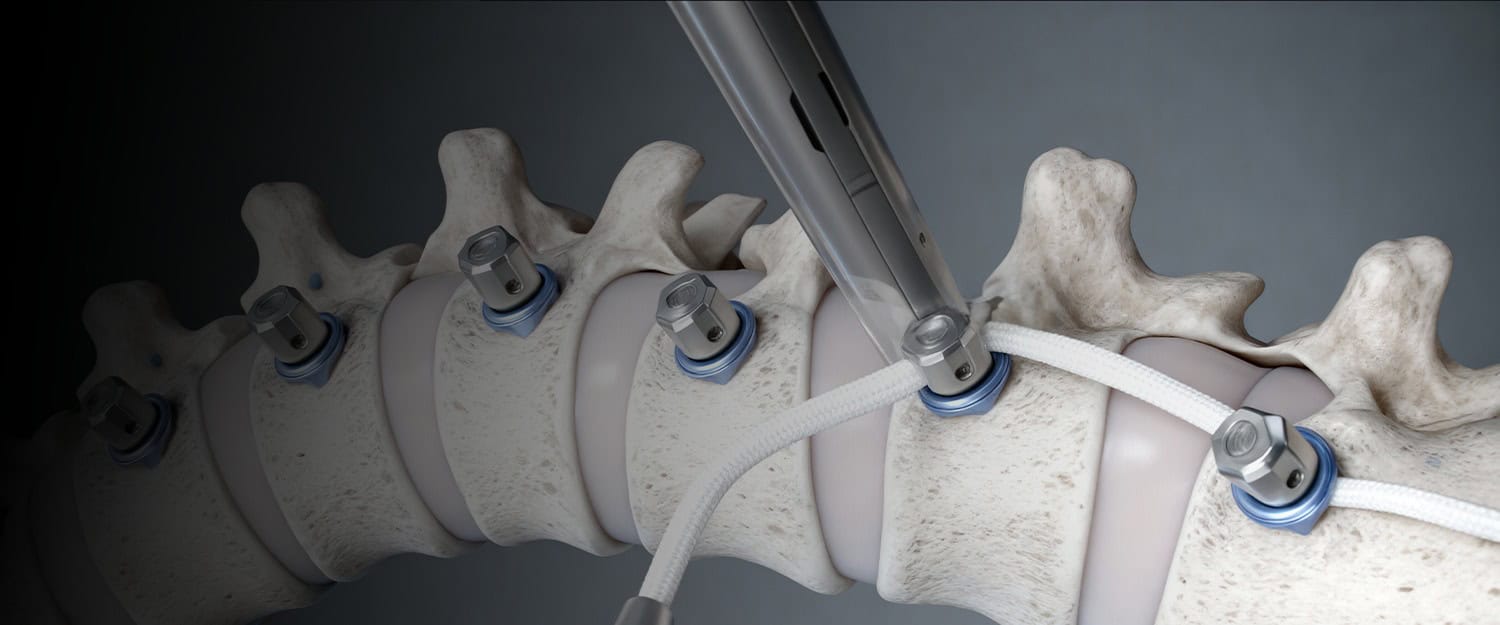
For selected Children with Scoliosis who still have growth remaining, Vertebral Body Tethering (VBT) is an Advanced Surgical Approach designed to reduce the spinal curve while preserving motion, unlike traditional fusion surgeries. VBT uses a flexible tether cord to guide correction over time as the child grows.
When is VBT Considered?
VBT is generally indicated for skeletally immature patients (those who are still growing) with Progressive Idiopathic Scoliosis, particularly when bracing has proven ineffective or intolerable. The following criteria are typically considered:
- Skeletally Immature Patients
- Progressive Idiopathic Scoliosis
- Major Cobb Angle ranging from 30° to 65°
- Failure of Bracing or Intolerance to Brace Wear
However, not all scoliosis patients are candidates for VBT. Factors such as the type of curve, its flexibility, the remaining growth, and vertebral anatomy all play a crucial role. Therefore, a specialized clinical evaluation by a Scoliosis Specialist like Dr. med. Ziad Aljian is essential to determine if this motion-preserving treatment is the right option.
VBT vs. Spinal Fusion: What’s the Difference?
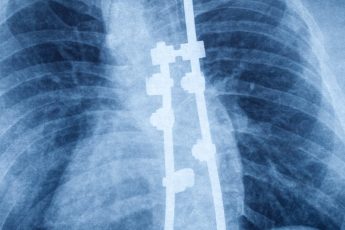
Posterior Spinal Fusion (PSF) is the most established surgical option for treating Moderate-to-Severe Scoliosis. This procedure corrects and stabilizes the spine using rods, screws, and bone grafts, permanently fusing the treated spinal segments to prevent further progression of the curve.
In contrast, Vertebral Body Tethering (VBT) is a non-fusion technique that employs screws and a flexible tether placed along the side of the spinal curve. The tether applies controlled tension, allowing the spine to gradually improve its alignment as the patient grows. The goal of this method is to preserve more natural spinal movement compared to fusion, but it is intended for carefully selected patients.
How Does Vertebral Body Tethering Work?
VBT is often described as growth modulation. The tether is positioned on the convex (outer) side of the curve and gently tensioned. As the patient grows, the tether helps guide the spine toward a more balanced shape while allowing motion between the vertebrae.
The VBT Surgical Process
Before surgery, your specialist will typically request imaging, such as standing X-rays, and, in some cases, an MRI or CT scan, to confirm the curve pattern, assess flexibility, and plan the procedure.
During the VBT Procedure:
- A Targeted Approach is used to access the Side of the Spine.
- Screws or Anchors are placed into Selected Vertebrae.
- A Flexible Tether Cord is connected and tensioned to Improve Alignment.
- Neuromonitoring is employed to support safety during the correction process.
Recovery After VBT: What to Expect
Recovery varies by Patient, Severity of the Curve, and Surgical Plan, but it typically includes:
- A hospital stay and early mobilization under supervision
- A gradual return to school and daily activities as advised by the treating team
- Follow-up visits with repeat imaging to monitor correction and tether performance
Since VBT relies partially on growth for ongoing correction, regular follow-up during the growth years is important.
Benefits of Vertebral Body Tethering
The potential advantages of VBT for suitable candidates may include:
- A motion-preserving, non-fusion approach
- Curve improvement while growth continues in selected growing patients
- A smaller correction strategy than long fusion
- A treatment plan that may better maintain flexibility than fusion
- A Minimally Invasive, side-approach technique, resulting in:
- Less Muscle Disruption compared to traditional posterior approaches
- Less Blood Loss
- Less Postoperative Pain
- Shorter Hospital Stays
- Faster functional recovery and an earlier return to daily activities
- Preserved Spinal Mobility
Who Should Consider VBT in Dubai, UAE?
If you are in Dubai or traveling to the UAE for Scoliosis Care, evaluating for VBT is generally appropriate for:
- Children and Teens with Progressive Idiopathic Scoliosis
- Patients with Remaining Growth
- Curves typically within the 30° to 65° range, depending on clinical assessment
- Patients who have Failed Bracing or cannot tolerate wearing a brace
Conclusion
Vertebral Body Tethering (VBT) is an Advanced, Motion-Preserving surgical option for selected growing patients with Scoliosis. The aim is to correct the spinal curve without fusion, using growth to facilitate ongoing improvement. However, since VBT is not suitable for everyone, a thorough consultation with a Scoliosis Expert and careful screening are important.
At the Complex Spine & Scoliosis Center at Adam Vital Hospital in Al Garhoud Dubai, our Spine and Scoliosis services focus on Individualized Planning, Advanced Imaging Assessment, and Surgical decision-making tailored to the Patient’s Curve Type, Age, and Goals.