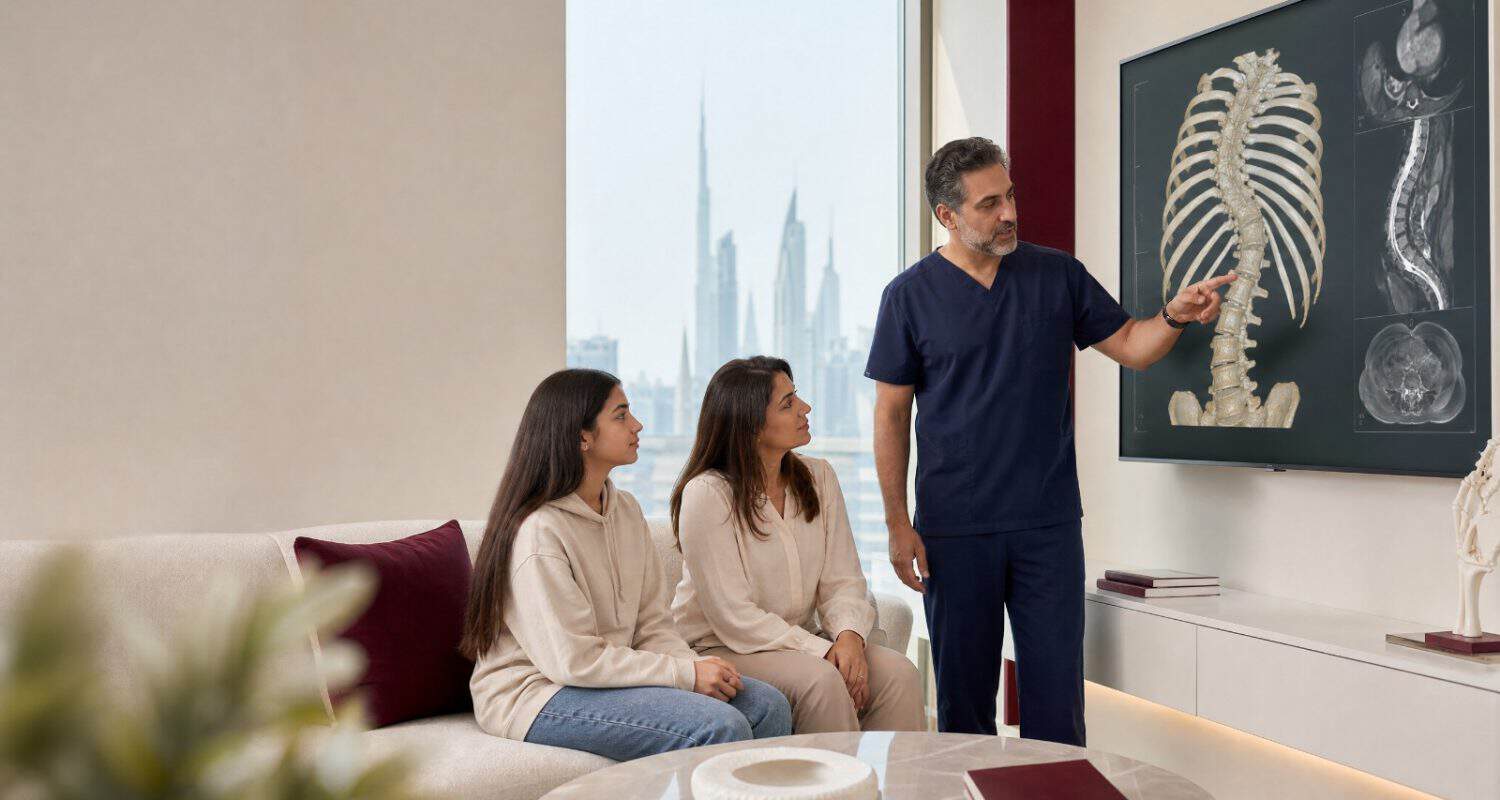
Is Scoliosis Surgery Safe? Modern Advances and Real Recovery Timelines
Being told that your child may need scoliosis surgery can be frightening. Parents often worry about the spinal cord, pain, complications and whether their child will return to school and normal activities.
Is scoliosis surgery safe?
Scoliosis correction is a major operation, and no surgery is completely risk-free. However, advances in surgical planning, spinal implants, anesthesia, and real-time neurological monitoring have made modern scoliosis surgery safer and more predictable.
The safest approach is not always the newest or least invasive procedure. It is the treatment that best matches the patient’s age, curve pattern, remaining growth, and overall health, performed by an experienced spine deformity surgeon.
When Is Scoliosis Surgery Recommended?
Scoliosis surgery may be considered when a spinal curve:
- Becomes severe or continues to progress
- Worsens despite bracing or conservative treatment
- Is likely to progress after growth is complete
- Causes significant spinal imbalance or deformity
Surgery is commonly discussed when an adolescent’s curve approaches approximately 45–50 degrees. However, the decision is based on more than the Cobb angle alone.
The goal is to prevent further progression, improve spinal balance and achieve a safe correction not necessarily to make the spine perfectly straight.
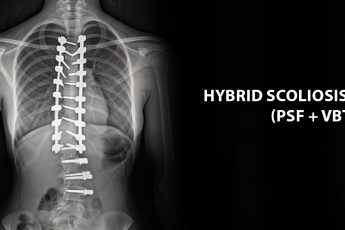
Most adolescent scoliosis operations involve spinal fusion. Screws and rods are used to carefully correct and stabilise the spine, while bone graft allows the treated vertebrae to heal together over time.
Understanding Modern Safety Protocols in Scoliosis Surgery
Safety begins before the patient enters the operating theatre and continues throughout recovery.
Detailed Surgical Planning
Before surgery, the specialist evaluates the patient’s X-rays, curve flexibility, spinal balance and overall health.
The surgeon determines:
- Which vertebrae need to be treated
- How much correction can be achieved safely
- Which spinal segments can remain mobile
- Whether additional imaging or medical testing is required
The procedure is customised to the individual patient rather than based only on the size of the curve.
Real-Time Neurological Monitoring
During surgery, specialised equipment continuously monitors signals travelling through the spinal cord and nerves.
If a significant change is detected, the surgical team can pause, investigate and adjust the correction immediately.
Neurological monitoring cannot remove all risk, but it provides an important additional layer of safety during spinal correction.
Controlled Curve Correction
Modern spinal screws and rods allow the surgeon to correct the curve gradually and stabilise the spine.
The objective is not to achieve the maximum possible correction. It is to create a balanced and stable spine without placing unnecessary stress on the spinal cord or surrounding structures.
Infection and Blood-Loss Prevention
The surgical team uses strict sterile techniques, preventive antibiotics and blood-conservation strategies.
The patient’s blood pressure, breathing, temperature and blood loss are closely monitored throughout the operation and during the early recovery period.
What Are the Possible Risks?
The honest answer is that scoliosis surgery cannot be described as risk-free.
Possible complications may include:
- Infection
- Bleeding
- Reactions to anaesthesia
- Nerve or spinal cord injury
- Blood clots or respiratory complications
- Implant problems
- Delayed bone fusion
- Persistent pain
- The possible need for additional surgery
Serious complications are uncommon in otherwise healthy adolescents, but the individual risk depends on the severity of the curve, the patient’s health and the complexity of the procedure.
Families should receive a clear explanation of the expected benefits, limitations and patient-specific risks before surgery.
Minimally Invasive vs. Traditional Scoliosis Surgery
Parents searching for minimally invasive spine surgery in Dubai may assume that smaller incisions always mean a safer or better result. This is not always the case.
The correct approach depends on the type and severity of scoliosis.
Traditional Posterior Spinal Fusion
Posterior spinal fusion is performed through an incision along the back. It allows the surgeon to place screws, rods and bone graft across the required spinal levels.
For many adolescents with severe, rigid or complex curves, posterior spinal fusion remains the standard treatment because it provides strong fixation and reliable deformity correction.
Minimally Invasive Scoliosis Surgery
Minimally invasive techniques use smaller incisions and aim to reduce disruption to the muscles and surrounding tissues.
In selected patients, potential benefits may include:
- Reduced blood loss
- Smaller scars
- Less early postoperative discomfort
- A shorter hospital stay
- Faster initial mobility
However, minimally invasive surgery is not suitable for every scoliosis curve. Complex or severe deformities may be treated more safely and effectively with a traditional surgical approach.
The quality and safety of the correction are more important than the size of the incision.
Growth-Preserving and Fusionless Options
Some growing adolescents may be candidates for procedures such as vertebral body tethering, also known as VBT.
VBT uses a flexible tether to influence spinal growth without performing a traditional fusion. It may be suitable for carefully selected patients who still have significant growth remaining and a flexible curve.
It is not appropriate for every child, and additional surgery may sometimes be required. A detailed assessment is necessary to determine whether fusionless treatment is a suitable option.
What Is the Real Recovery Timeline After Scoliosis Surgery?
The recovery time for scoliosis surgery depends on the patient’s age, general health, curve complexity and type of operation.
A typical recovery may include:
First Few Days
The patient is encouraged to sit, stand and begin walking with assistance soon after surgery. Pain is managed with medication, while neurological function, wound healing and mobility are closely monitored.
Many adolescents remain in the hospital for approximately three to four days after an uncomplicated spinal fusion.
First Four to Six Weeks
At home, recovery focuses on rest, short walks and gradually returning to normal daily activities.
Many students can return to school within four to six weeks, sometimes beginning with shorter school days.
Three to Twelve Months
Exercise and sports are reintroduced gradually. Light, non-contact activities may be allowed after several months, while unrestricted or contact sports may require six to twelve months.
These timelines are general estimates. The surgeon’s instructions should always take priority because every patient heals differently.
How Modern Recovery Protocols Support Healing
Modern recovery programmes are designed to help patients move safely and return home without unnecessary delays.
They may include:
- Education before surgery
- A combination of pain-control methods
- Early eating and drinking
- Early assisted walking
- Physiotherapy and nursing support
- Clear home-care instructions
Faster recovery does not mean rushing the healing process. It means supporting safe movement, controlling pain and reducing avoidable delays.
Will My Child Have a Normal Life After Surgery?
Most adolescents gradually return to school, social activities, exercise and an active lifestyle after recovery.
The fused section of the spine will no longer move independently, but the unfused parts of the spine, hips and surrounding joints continue to provide movement.
The amount of stiffness depends partly on how many spinal levels are treated. Careful surgical planning aims to correct the curve while preserving as much healthy spinal movement as safely possible.
Scoliosis Surgery with Dr. med. Ziad Aljian in Dubai
Dr. med. Ziad Aljian is a German Board-Certified Consultant Orthopaedic Spine Surgeon with more than 20 years of clinical and surgical experience.
His expertise includes:
- Paediatric and adult scoliosis
- Kyphosis correction
- Complex spinal reconstruction
- Revision spine surgery
- Spinal fusion
- Vertebral Body Tethering (VBT)
- Growth-preserving spinal procedures
At Adam Vital Hospital’s Complex Spine & Scoliosis Centre in Dubai, each surgical recommendation is based on the patient’s curve pattern, growth, symptoms, overall health and individual risk profile.
The objective is not simply to use the smallest incision. It is to select the safest and most appropriate procedure for achieving a balanced, stable spine and a structured return to everyday life.