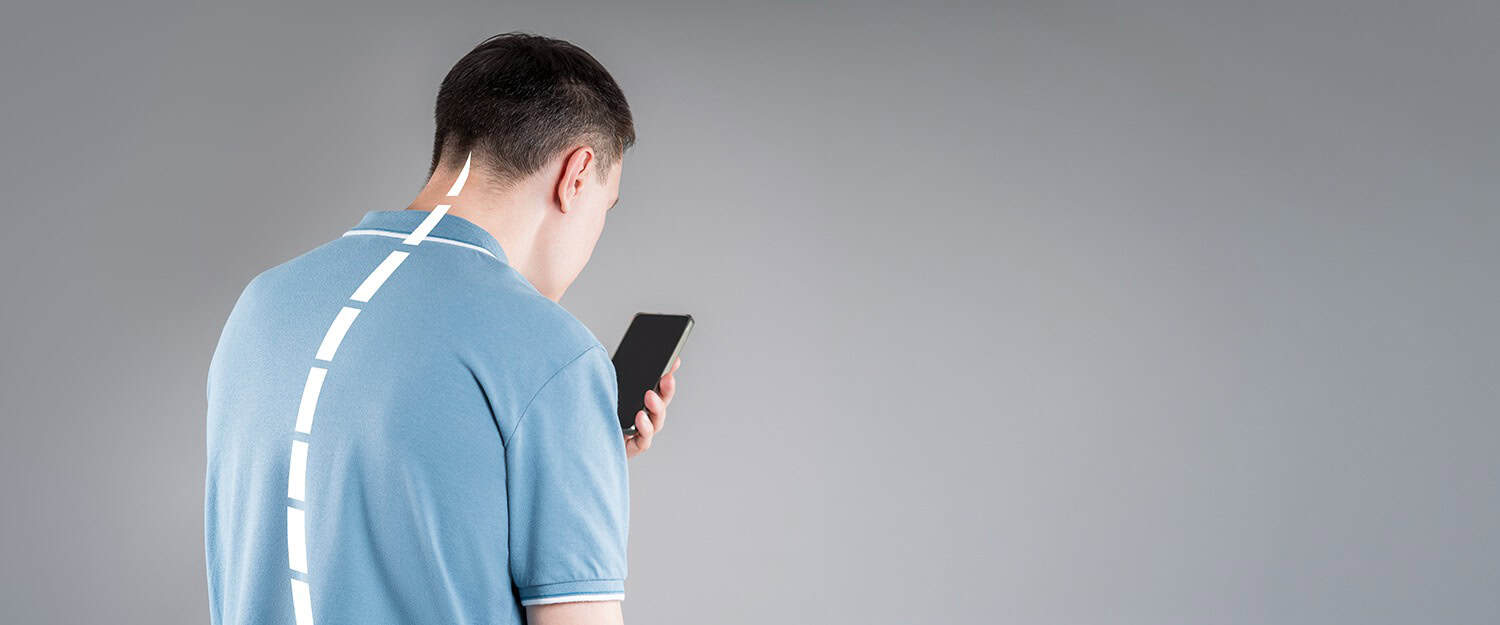
Bad Posture vs. Scoliosis: How to Check for Structural Curves
Uneven shoulders or a slightly tilted posture do not automatically mean that your child has scoliosis. However, an asymmetry that remains when your child stands straight or bends forward may require a specialist assessment.
The main difference between bad posture and scoliosis is that postural imbalance is often flexible, while structural scoliosis involves a spinal curve with rotation that does not disappear simply by changing position.
Why “Stand Up Straight” Does Not Fix Structural Scoliosis
Poor posture may improve when a child consciously straightens the shoulders, adjusts the pelvis or changes position.
Structural scoliosis is different. The spine curves sideways and rotates, which may cause one shoulder blade, rib cage or side of the waist to appear more prominent. Bad posture does not cause adolescent idiopathic scoliosis, although scoliosis itself may make a child appear to lean or stand unevenly.
Telling a child to “stand up straight” may temporarily change their appearance, but it will not correct an underlying structural curve.
Key Differences: Posture Problems vs. Structural Spinal Curves
Signs that suggest a flexible posture issue may include:
- The shoulders become level when the child stands straight.
- The asymmetry changes with position.
- There is no visible rib or back prominence during forward bending.
Possible signs of scoliosis include:
- One shoulder consistently higher than the other
- One shoulder blade appearing more prominent
- An uneven waist or one hip appearing higher
- The head not centred over the pelvis
- One side of the ribs or back rising higher during forward bending
Do uneven shoulders mean scoliosis?
Not always. Uneven shoulders are only one possible sign and should be considered together with other changes in the back, ribs, waist and hips.
How to Check for Scoliosis at Home
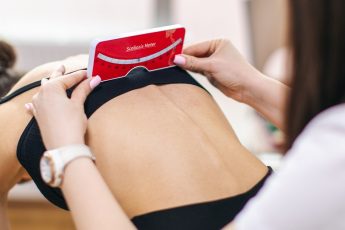
Parents can perform a simple visual check using the Adam’s Forward Bend Test, which is commonly used as an initial scoliosis screening method.
Step 1: Check the Standing Position
Ask your child to stand naturally with:
- Feet together
- Knees straight
- Arms relaxed by the sides
- Back facing you
Look for uneven shoulders, shoulder blades, waistlines or hips.
Step 2: Perform the Forward Bend Test
Ask your child to:
- Bend forward slowly from the waist.
- Keep the knees straight.
- Allow the arms to hang freely.
- Bring the back close to a horizontal position.
Stand behind your child and look across the back from the upper spine toward the waist.
Step 3: Look for Asymmetry
Check whether:
- One side of the rib cage is higher
- One side of the lower back is more prominent
- The spine or trunk appears shifted to one side
A visible rib hump or one side of the back remaining higher may indicate spinal rotation and should be assessed by a doctor.
When Should Parents Arrange an Assessment?
Arrange a scoliosis assessment if:
- The asymmetry remains despite standing straight
- A rib or back prominence appears during forward bending
- One shoulder, hip or side of the waist is noticeably higher
- The difference becomes more visible during a growth spurt
- Scoliosis runs in the family
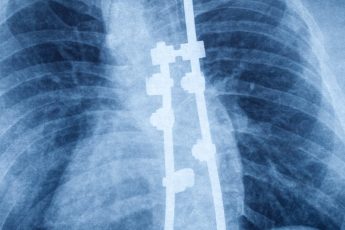
The forward bend test is a screening tool, not a diagnosis. A specialist may perform a physical examination, measure trunk rotation and request standing X-rays to confirm whether a structural curve is present and measure its severity.
Scoliosis Assessment with Dr. med. Ziad Aljian in Dubai
Dr. med. Ziad Aljian is a German Board-Certified Consultant Orthopaedic Spine Surgeon with more than 20 years of experience in paediatric and adult spinal conditions, including scoliosis and complex spinal deformities.
At Adam Vital Hospital in Dubai, children and adolescents receive a detailed assessment of spinal alignment, growth and curve progression. Early evaluation can help distinguish a temporary postural imbalance from structural scoliosis and determine whether monitoring or treatment is required.